
The Incense Book by Kiyoko Morita. Chapter 1.
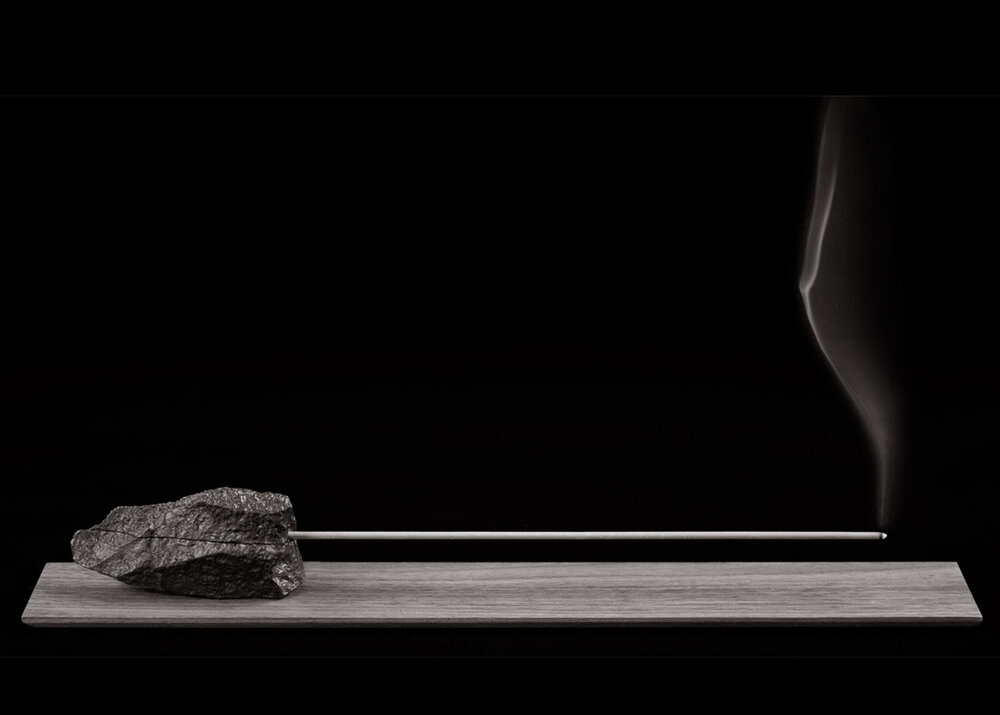
It is no exaggeration to say that incense has existed since the beginning of human history. The Bible mentions the “burning offerings” that Noah made to God after the flood, and “the Lord inhaled the sweet smell” (Genesis VIII, 12:21). This fragrance calmed the wrath of God and for the sake of man he vowed not to curse the earth. Just imagine that Noah and his family, one of the few chosen by God, was saved from destruction. He builds an altar and burns incense - and it is incense that does not allow God to destroy humanity again! As we can see, incense has played an important role since the earliest annals of human history.
As for aromatic substances, we are probably most familiar with perfumes - “parfum” in French. And although we rarely think about heating or burning, associating these actions with perfumes, it is interesting to note that the Latin word for perfumum is synonymous with perfumum, which means to let out smoke, that is, smoke from trees and plants. It is not surprising when we understand that aromatic substances have been important since ancient times for use in sacred rituals, where they were heated to release their aroma. Those who performed such rituals had to cleanse their bodies and souls by exposing their clothes to the smoke emitted by aromatic substances, and sometimes rubbing aromatic ointment into themselves beforehand.
The legend of the three kings from the East, who brought gifts to the infant Christ, is well known. Two of the gifts were aromatic: incense and myrrh. The flavors used during the Old and New Testaments were hardened wood juices. Frankincense has a milky color and a luxurious sweet aroma, and myrrh is dark red, bitterly sweet and pungent. But their aromas are emitted only when they are heated or burnt.
In ancient Egypt, myrrh, in particular, among many aromatic compounds was used in the preparation of mummies; in fact, some etymologists trace the word “mummy” to “myrrh”. In addition to its practical function of embalming and sterilizing corpses, it also had religious significance, since the fragrance was considered a messenger with which the living addressed the souls of the dead in the underworld. Therefore, it is not surprising that incense should have been used for funeral rites. Sandalwood was burned during the cremation of Buddha, and when Christ died, a mixture of incense, aloe and wood and myrrh was prepared. (A mixture of several aromatic substances was often used for funeral rites, creating a stronger aroma than burning one substance).
What kind of myrrh is this that the ancient Egyptians desperately searched for and where did they find it? As in the case of incense, people idolized myrrh for its characteristic aroma. The substance that emitted the aroma when heated was milk and sap taken from evergreen trees, and these trees, as well as those that produce styrax and benzoin (both aromatic resins), all grew in Arabia. Other aromatic materials were produced only in India, China and Southeast Asia. Since aromatic substances became an important part of people's lives, considerable wealth was spent and other goods were bought in exchange for them, and the regions supplying the aromatic tree prospered from trade with Ancient Egypt, Greece and Rome, where such trees did not grow.

The use of aromatic substances for pleasure in ancient Egypt, Greece, Rome and the East played a large role in trade and cultural exchange. Among the many historical figures who enthusiastically searched for heady aromas, was the Roman emperor Nero. It is said that he installed wall lights in his luxurious apartments to entertain his guests with a shower of fragrant oils or fragrant flower petals. His wife, who also loved perfumed lotion, had a personal consultant who was responsible for finding the most extravagant aromatic substances. King of Macedonia Alexander the Great was a passionate collector of aromatic substances, and it was their search that made him move further and further on his famous expeditions to Greece and Persia.
There is a well-known legend that the king of Ashoka, the benevolent king of India about 250 BC, was fatally ill, and after a desperate search for the right medicine for seven days, it is believed that the burning of Styrax was successful in the treatment and the king was saved. It is said that the servants of the king rejoiced in headdresses made of wood that makes styrax.
There are also various descriptions of the use of aromatic substances and incense in China. Chinese annals from 5 BC states that the ruler of China was almost destroyed by an obsession with one court lady whose body exuded a heady aroma. She became the standard of "aromatic" beauty. Another story tells of a beautiful concubine named Chao Fei-yen, who perfumed her body with incense to attract the attention of Emperor Han Wu in 150 BC. Around 8 CE, another beautiful Tang dynasty concubine named Yangifei used an extravagant amount of aloe tree to build her pavilion and scent her body to hide any unwanted body odors.
For millennia, people of many cultures have felt a desire to stay forever young, and for these purposes aphrodisiacs have been sought. At times, the intention of extracting such aphrodisiacs from ordinary individual demand has turned into a global meaning for ruling clans who wish to maintain their political and social control through the expansion of pedigrees. Among the sought-after aphrodisiacs were musk, cloves, myrrh and aloe. Some substances were applied to the body, some were taken orally, and others were mixed with oil and burned.
These spices and aromas became so valuable that European merchants fought for the right to trade them. Countries such as Morocco and Ceylon, which produced large quantities of cloves and cinnamon, flourished, but were also exploited. Japan possessed low-value spices and incense, so it was destined to remain an importer and consumer, using substances for religious and artistic purposes.


