
The Incense Book by Kiyoko Morita. Chapter 2
2. Japan's meeting with frankincense
Incense and Buddhism.
While the aesthetic practice of ko-do (literally “the path of aroma” is usually translated as the art of making incense) is a product of Japanese culture. The ingredients used for kodo are not native to Japan. Unlike tea, which was originally imported from China but later grown in Japan, incense still comes from the tropics of Southeast Asia. The oldest incense notes in Japan appear in 595 A.D. in the first Japanese chronicle Nihon Shoki (Chronicles of Japan): “Aloe wood drifted off the coast of the island of Awaji. Its length was six feet. The people of the island, being unfamiliar with aloe, used it along with other firewood to burn for cooking; smoky steam spread its aroma far and wide. In amazement, the locals presented this wood to the Empress. ” This fragrant aloe in Japanese is called “jinkoh” or simply “jin”, which means “incense drowning in water”. ("Dzinko" comes from the Sanskrit word meaning "immersion in water," heavy ").
However, not all wood that the Japanese call "jinko" drowns in water. If it is not oily or sufficiently resinous, it may float and be less fragrant and therefore less valuable. What gives jinkoh such an aromatic property? No one knows. It was once believed that it forms only some time after the old aloe tree dies, falls and for some time is under the leaves and soil. Recently, however, this aromatic property has been discovered in living trees belonging to the Daphne family. The color of the jinko is usually dark brown or black. The more resinous the wood, the darker, heavier and more aromatic it becomes. However, this biochemical change is extremely rare, and it takes a very experienced person to find such an aromatic tree buried underground or alive in the jungle.
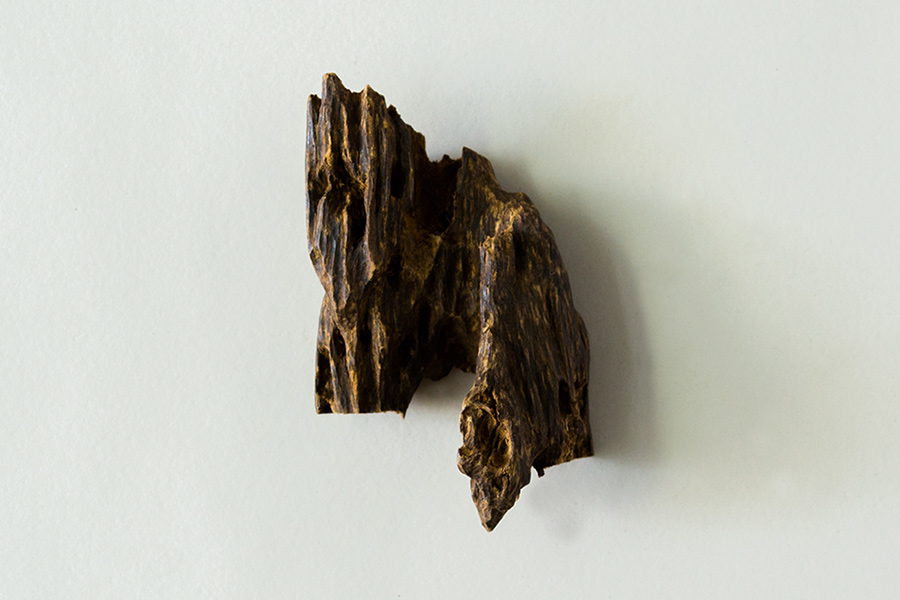
Piece of Jinkoh Wood
When the Awaji islanders (near Kobe) brought the aloe tree to the courtyard due to the amazingly fragrant aroma of its smoke, Prince Shotoku (574-622 CE) recognized him immediately as “jin,” a precious incense. Incense was introduced in Japan along with Buddhism by the middle of the sixth century through the Korean Peninsula and was already part of the upper classes. As an ardent supporter of Buddhism, Prince Shotoku was well acquainted with this fragrance from Buddhist rituals that could not have been performed without incense.
During the Nara period (710-794 CE), political power fell into the hands of leaders who supported Buddhism. Buddhist rituals began to be included in the state ceremonies and functions of the imperial court, which were based on the traditional rites of Shintoism, the native religion of Japan. Incense was now burned as an offering to the Buddha, and to cleanse the place of the ritual. And only after the Meiji Revolution (1868), when the reins of power from the feudal clan were returned to the emperor, the tradition of using incense during ceremonies was abandoned. Thus, the Meiji Revolution, with its “western” accent, ironically marks the return of incense, offered for initial use, as part of the rituals of Buddhism.
Unfortunately, this also gave rise to the popular association of the smell of incense with death - from a funeral and cemetery, which to some extent has survived to this day.

Incense used in ancient Japanese Buddhist rituals, at first, was a mixture of five to seven detailed aromatic materials such as jinko, sandalwood, cloves, cinnamon and camphor. The quantity and combination of these materials varied slightly depending on the Buddhist community. This type of incense was sprinkled directly with hot ash containing burning coal. After the stick incense technique was introduced in Japan in the sixteenth century (some say that from Koreans, others from the Chinese), and sticks became as common as burning incense on coal. Although the sticks were often burned just for fun, the Japanese have long associated it with Buddhist rituals. It was believed that the fragrance helps to induce the presence of Buddha and invoke his grace into our world.
Two large pieces of “jinko” are still kept in the eighth-century imperial vault on the territory of the Todaiji Temple in Nara. The larger piece was a gift to the temple of Empress Komye in 756 AD and is called Todaiji, although it is usually called Ranjatai. Initially weighed about 13 kilograms, now it weighs 11.6 kilograms, because emperors and shoguns cut small pieces from time to time for their own use and reward loyal servants. Among the happy recipients, it was said that it was the shogun Ashikaga Yoshimasa (1436-90) and Oda Nobunaga (1534-82), as well as the Emperor Meiji (1852-19120). Marks on the Ranjatai mark the places where the pieces were cut for wood. The rumor that Oda Nobunaga sent a group of his emissaries to the priests of the Todaiji temple in order to agree on a particle for his personal use made Renjatai a particularly interesting subject for visitors.
If we burned a piece of this tree today, we would feel the unique, refined aroma of this “jinko”, just like the shoguns could smell it many centuries ago. Today it is impossible to imagine with aromas that oxidize and lose their aroma after about twenty-five years. A large piece of incense, stored together with many other exquisite items imported from Asia and the Far East, is clear evidence that incense was in demand and valued in the feudal era of Japanese history.


