
The Incense Book by Kiyoko Morita. Chapter 3
3. The path of the courtiers.
Largely due to the interest in Buddhism, the political and cultural ties between the Chinese Tang dynasty and Japan flourished during the Nara period and the early Heian period (794-1192), until Japan stopped sending official envoys to China. Throughout this time, China's influence on the life of the Japanese aristocracy was solid. Japan continued to assimilate Buddhism, while maintaining the use of incense in ceremonies. One of the first representatives of the ceremonial use of incense was the Chinese priest Gandzin (688-763 CE), who was invited to draw up the teachings of Buddhism for the Japanese. Numerous attempts to cross the Sea of Japan cost him his sight, but from the fourth attempt he finally managed to reach the Japanese islands. Along with the Buddhist creed, he introduced various kinds of spices, as well as mixed incense and their recipes, which were already popular in China. For some time, the Chinese used mixed incense for pleasure and for medical purposes, in addition to religion, and Heian palace nobility quickly adopted this method. It was amazing to recognize China - the most exotic place in the world at that time - recreating Chinese flavors. In addition to religious functions, this new way of using the fragrance was called “soradaki” (Literally, “empty” burning. Emptiness, of course, refers to the absence of religious goals), which distinguishes it from “sonee-ko” (offering incense to the Buddha). The purpose of incense, for example, filling the aroma of a room or clothing, or playing the incense comparison, has become the art of incense, or Ko-do.
The world's first novel, The Tale of Genji, written by Lady Murasaki Shikibu in Japan in the 11th century, provides us with valuable information on how incense was valued during the Heian period, when it was at the peak of its use for pleasure. In one scene, Prince Genji, the protagonist of the novel, searches for a cure for malaria and visits a temple on the northern hills of Kyoto. A priest in that temple burns incense to greet his guest. Prince Genji notices both Soradaki and Sonae-Ko and suggests: "A bewitching scent floated in the air, mixing the exquisite aromas of incense from the altar." And the religious man prepared the fragrance as a gesture of hospitality in addition to burning incense on the altar.

“Soradaki” refers not only to incense, which is heated for pleasure, but also to the filling with the aroma of clothes. Judging by the numerous references to aromatic clothing that we find in poetry and in prose works of the Heian period, we learn that the presence of noble aromas in robes was a common practice among courtiers. This type of incense impregnation of garments was performed by a large censer and incense, rolled up in the shape of balls, and took almost all night. A censer was placed in a basin with water, primarily to prevent fires. But dampness also helped the fragrance stick to the fabric. The basin was covered with a metal net, covered with a large basket of bamboo or silver, and the clothes that were scented were thrown over the basket. If the clothes were not satisfactorily scented, they could be perfumed in parts using a smaller censer, as described in another part of The Tale of Genji: "... again with a miniature brazier that he placed for a moment from the inside of each sleeve." In her book, Notes at the Head, written around 1002, Lady Sönagon noted, “wash your hair, tidy up your appearance and put on fragrant robes; even if no soul sees these preparations, it still brings inner satisfaction. ” Obviously, the scented clothing was created for personal pleasure.
Through experimentation, the courtiers began to adapt the use of incense in even more innovative ways. In addition to using it for cosmetic and medicinal purposes, incense was burned to enhance the pleasure of the time of year or to raise the mood of those gathered. Poems from Kokinsho, the first Japanese imperial anthology of lyric poetry (905 AD), illustrate the fascination with court aromas.
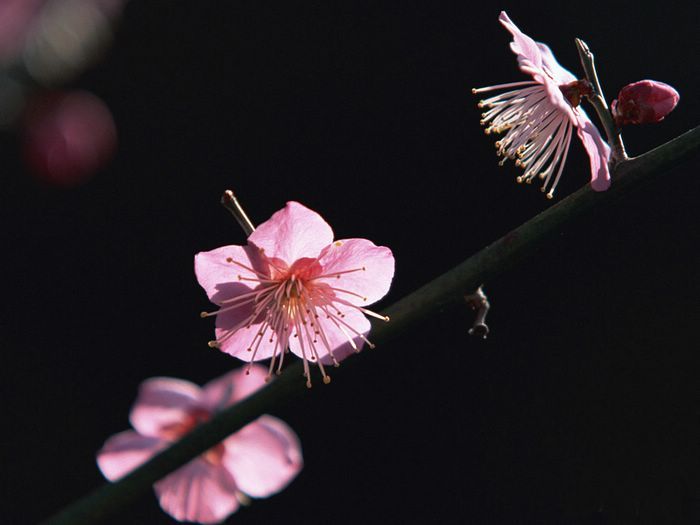
"In the moonlight,
where do plums bloom?
Their fragrance will show the way ”
“The Fragrance -
much more attractive than the bloom itself -
and whose fragrant sleeves
flowers in my garden fanned? "
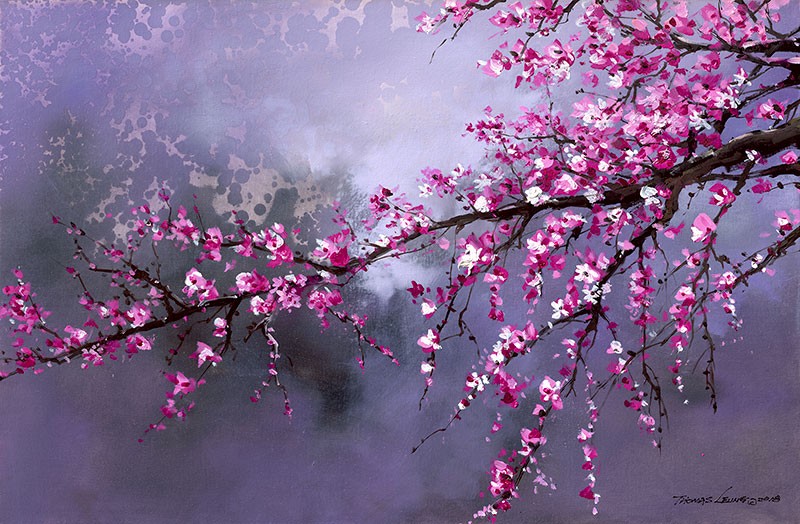
As we can see, the courtiers of the Heian period admired the aroma of plum blossoms much more than its flowering, and in addition to auditory and visual sensations, they also used the sense of smell. This perception of aroma meant that smells were an important element of their life.
Over time, aristocrats were thrilled to find that the original incense recipes brought to Japan by Priest Ganzin could be modified to create their own subtle scents. It became like adapting a dessert recipe that included its favorite ingredients. By mixing their own combinations of ingredients, they were able to fine-tune the scent rating scale, which led to the emergence of competitions in comparing their creations with each other. Thanks to these contests and other games, they were able to more fully enjoy incense. This was the beginning of the emergence of an evaluation of incense for their aroma, as well as the spiritual component provided for by the process of their manufacture.


