
The Incense Book by Kiyoko Morita. Chapter 5
5. Creating incense schools: an art form for everyone.
Towards the end of the Muromachi period, co-do art has established itself as an organized art form that differs from the unofficial assessment of incense during the Heian era, and only in the middle of the Edo period (1603-1867) does co-do reach a peak of popularity. The use of incense flourished in the capital Edo under the Tokugawa regime. It was no coincidence that the traditional court arts in the fifteenth century, under the auspices of the Ashikagi shoguns - the No Theater, tea ceremony, poetry and Ekibana, and incense - were now practiced by the elite of the Tokugawa clan (the shogunate’s court, the largest military feudal lords of that time or the “daimyo” and their vassals samurai), as well as the newly formed urban trading class.
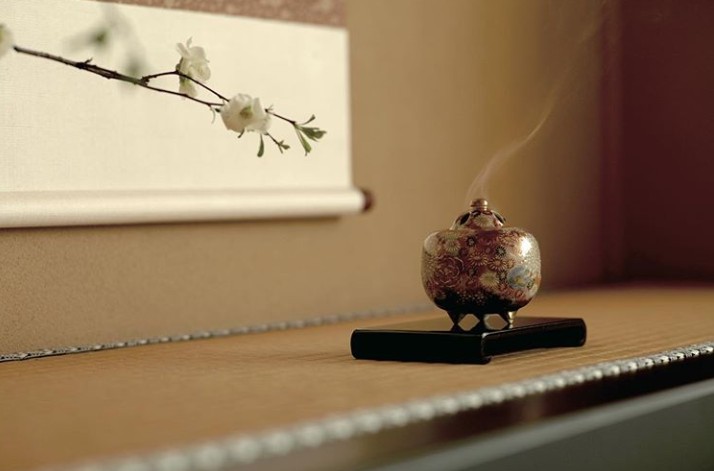
The ko-do, which was previously dominated by men, also became popular among privileged women, such as the daughters of the shoguns, and in some cases among ordinary people, including courtesans. Incense began to be considered a “suitable female pastime” along with playing koto (Japanese lyre) and holding a tea ceremony. In fact, it was recommended as the very first art form to be mastered by an experienced courtesan, followed by a tea ceremony, poetry and musical instrument playing.
An abundance of references to the use of incense can be found in the literature of this period. On woodcuts depicting the “floating world” (the epithet of social flow and the decline of time) or ukiyo-e, we see the courtesans, as well as the inhabitants of Edo, depicted using incense. For men claiming elegance, it was fashionable to wear incense in the sleeves of a kimono to attract women. They used good incense, such as kyara, which means “superior aloe” to scent clothes. In the city of Edo, the word kyara became a very common noun: the woman kyara meant a beautiful woman, sabo kyara meant high-quality clogs and so on. They told stories about those who visited the pleasure quarters and exchanged incense with the courtesans after spending the evening with them, or even that the lost lovers were reunited, recognizing each other's smell.
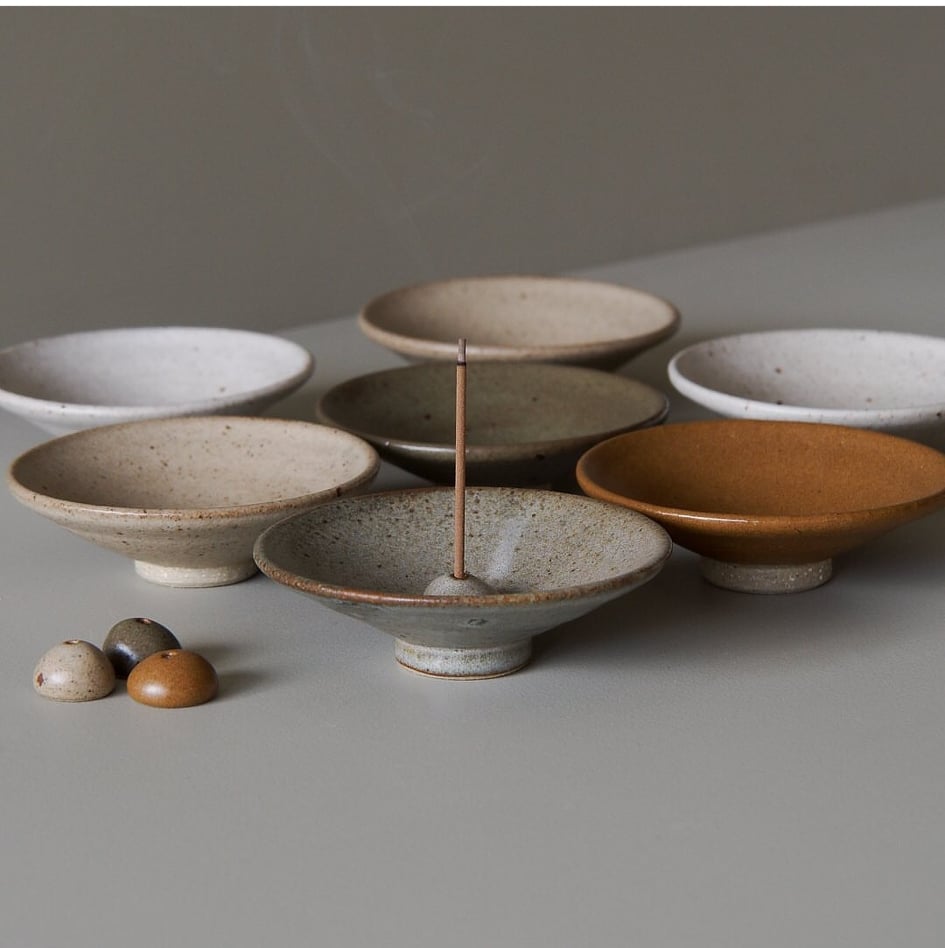
Among the objects of art of the Edo period, which are in museums today, there are many incense burners, containers for incense and exquisite lacquered boxes for incense - another evidence of the flourishing popularity of the co-do. Parents often prepared such a box with all the necessary attributes and accessories for their daughter when she was supposed to get married. Aromatic pillows and sachets also became widely used during this period.
With increasing popularity among ordinary people, the use of incense became regulated by a complex set of rules and customs, which were taught by professional craftsmen and described in specialized books. Incense connoisseurs who were professionally engaged in teaching co-do justified the legitimacy of their teachings by creating schools headed by masters, who, in turn, made special demands on their experience. Thus, participation in the co-do was organized into a pyramid of management. The legitimation of these schools was obtained (possibly fictitiously) from the two early founders of the co-do: Sino Soshina and Sanjohnisi Sanetaki, who probably did not know that they would be put on top of such a school system. During the Edo period, these two founders represented two ko-do schools: the Sino School (Sino Soshin), which represents the warrior style with its emphasis on strict rules and spiritual training, and the Oi School (Sanjonisi Sanetaka), which was distinguished by the refinement of the game, based on a more poetic spirit . These derivative branches, with a similarly thorough approach, taught students' corps traditional methods and skills for recognizing and identifying incense. As is customary in the traditional arts of Japan, the teaching of ko-do was very strictly guarded and transmitted orally from the masters to the students only when the latter reached a certain level of dexterity. This hierarchical system still prevails in traditional arts to this day.

Masters who led such schools during the Edo period wrote “textbooks” about ko-do, but due to the secretive nature of the teachings, these books described only the superficial aspects of the ceremony, such as the behavior required of the participants, the sequence of steps during the ceremony and the necessary utensils and items. Little has been said about the characteristics of various flavors. The spiritual and philosophical aspects - an important part of incense in the co-do - were not explained at least with any clarity. And over time, these aspects have lost their meaning. Through these fragrance games, people focused primarily on enhancing their ability to identify incense and to purchase exquisitely crafted utensils from incense wood. Many of the incense games that are played today were created in our century.


